Life Bible
- 4.8
- Rating
- 1.00M
- Installs
- Free
- Price

 Analysis by App-foxy
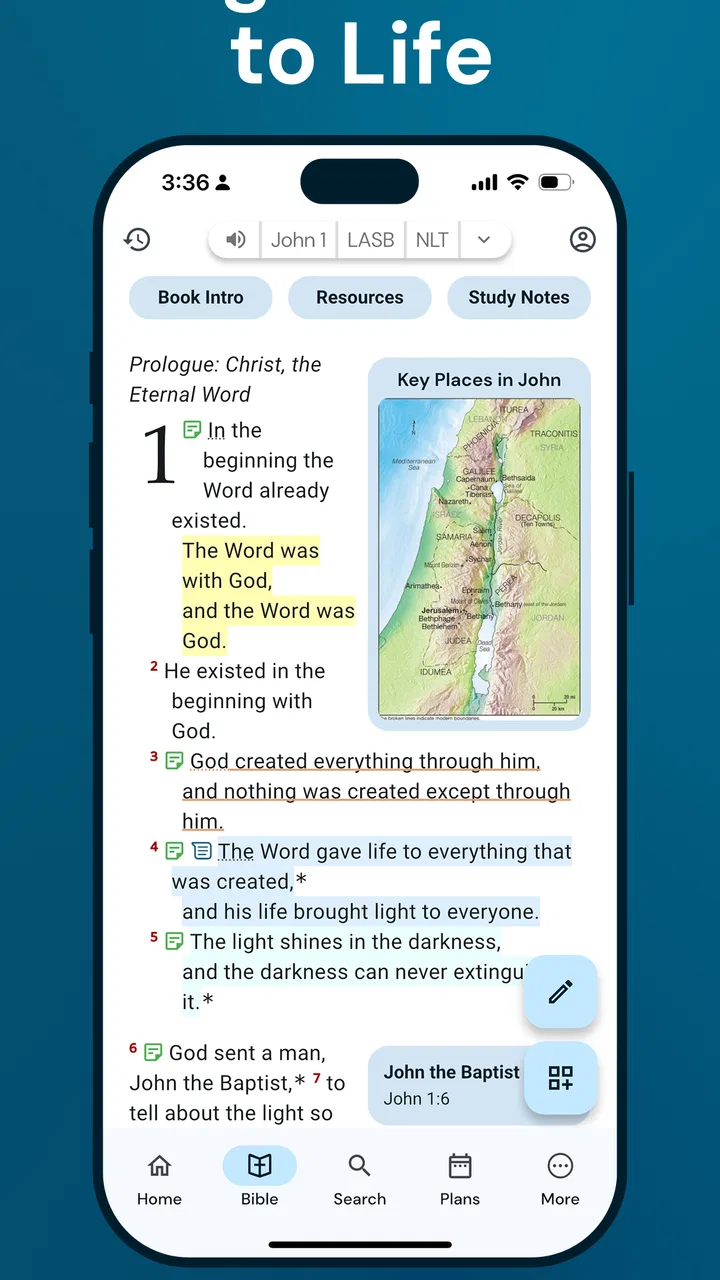
I started using Life Bible expecting a straightforward reading tool, but it quickly felt more like a compact study desk for my phone. It belongs to the Books & Reference category, and Tecarta, Inc. has built it around several different ways of approaching Scripture: daily verses, reading plans, study Bibles, commentaries, and audio. That combination matters because I do not always want the same kind of Bible session. Some mornings I want one short passage, while on another day I want to compare notes, follow a plan, or listen while doing something else.
The app is free to install and is suitable for Everyone, which makes it easy to try without committing money first. It has been available since September 12, 2014, and its current version is 10.2.335 for devices running Android 8.0 or later. Those details make it feel like an established product rather than a temporary reading experiment, although the experience still depends on how much of the wider library you want to use and how consistently your phone can connect to the internet.
How Life Bible feels when a connection is part of the experience
I find the connection matters most when a reading session shifts from the passage itself to audio or supporting study material. In this section, I focus on how to make that shift more deliberate: choose what you want to explore before opening extra resources, and let the main reading remain useful even if a handoff takes longer than expected.
You May Also Like

 Blood Strike: 2.5 Anniversary
Blood Strike’s Loadouts Turn Every Drop Into a Tactical Gamble
A close look at Blood Strike’s custom loadouts: how fast access to signature weapons reshapes its battle royale rhythm, rewards preparation, and narrows the gap between fights.

 Pandora - Music & Podcasts
Pandora’s Music Is Easy to Start, but Harder to Recover
Pandora’s strength is its low-effort path from a seed to a station. Its weak spot is how much confidence it asks you to place in connection, setup, and quiet recovery.

 8 Ball Pool
 Is Built on Rivalries, Rematches, and Routine
A close look at the rivalries, rematches, shared routines, and unanswered safety questions that turn a quick pool match into a persistent mobile community.

 Samsung Music
’s Quiet Strength Is Playing What You Already Own
Its reach comes less from spectacle than from dependable access to a personal library. That simplicity is both the app’s strongest retention engine and its ceiling.

 AccuWeather: Weather Radar
AccuWeather Review: A Quick, Clear Forecast for Everyday Decisions
For everyday plans, the best forecast is the one you can understand quickly. AccuWeather makes rain timing, radar, and local conditions easy to act on, with a few trade-offs.

 Hill Climb Racing
Why Hill Climb Racing Still Turns Crashes Into One More Run
A tiny car, a bumpy hill and one more upgrade: Hill Climb Racing keeps resurfacing because its simple chaos makes every near-miss feel personal.
More From Our News Desk



Network-dependent moments are most noticeable when studying
The basic appeal is obvious: I can open the app, choose a passage, and move from reading into a deeper study session without switching between several unrelated apps. The daily verse is useful when I want a small, defined starting point. Reading plans give a longer path, while study Bibles and commentaries are there when a sentence raises a question that the main text does not answer immediately. Audio adds another route into the material, especially when my eyes are busy or I want to revisit a familiar section by listening.
That convenience becomes more valuable when the phone has a reliable connection. Moving between reading material and supporting resources feels more natural when content can load promptly. I noticed that connectivity is not just a technical detail here; it affects how willing I am to explore. When a commentary or audio item takes time to appear, I am more likely to read the passage and leave. When the transition is smooth, I am more likely to investigate context, wording, or an unfamiliar name.
This is also where the app differs from keeping a single Bible text in a notes app or relying on a printed copy. A paper Bible is dependable and distraction-free, but it cannot bring a reading plan, reference material, and audio into the same pocket-sized session. A simple Bible reader may feel faster for quick lookup, yet it may not offer the same study-oriented range. Life Bible is strongest when I want those layers together rather than when I only need to find one verse.
There is a trade-off. A broad collection can make the app feel busier than a minimalist reader. I sometimes need a moment to decide whether I should continue reading, open a commentary, follow the plan, or start audio. That is not a serious flaw, but people who want an extremely quiet interface may prefer a more focused alternative.
A practical mobile routine for busy days
My most useful routine is to keep the first session small. I open the daily verse or the next item in a reading plan, read without immediately chasing every reference, and only then use the study material for the part that genuinely needs more attention. This prevents the app from turning a short morning habit into an unplanned research session. It also makes the different tools feel purposeful instead of decorative.
For example, on a weekday commute I might read a short passage before leaving home, then return to the same subject later with audio while preparing lunch. In the evening, I can use a commentary to examine a difficult section rather than trying to do everything in one sitting. This split approach works well on a phone because the app supports several session lengths, even though the quality of each session depends on whether the needed material is ready when I need it.
Audio is particularly useful in situations where reading is awkward, but I would not treat it as a universal replacement for text. Listening is convenient while walking around the house or doing routine chores, yet it is harder to pause and compare details in the same deliberate way. For close study, I still prefer the written passage with supporting notes nearby. For repetition and reflection, audio is the better fit.
The app also suits people who move between casual and serious use. Someone new to regular Bible reading can begin with the daily verse and gradually try a plan. A more experienced reader can use the study resources when a passage deserves extra attention. I would be less enthusiastic about recommending it to somebody who wants only a plain, instant text with no additional layers, because the wider feature set is part of the reason to choose it.
What happens when loading fails or the connection changes
Connectivity problems are most frustrating at the moment I am trying to change modes. Reading a passage is one task; opening audio, a commentary, or another study resource is another. If the connection is weak, the interruption can break the rhythm of a quiet reading session. That matters more here than it would in a basic notes app because the app encourages movement between related resources.
My practical advice is to begin important study sessions while the phone has a stable connection, rather than waiting until I am already travelling or in a place with unreliable service. I also avoid tapping repeatedly when something is slow. Repeated attempts do not make the experience feel faster, and they can leave me unsure whether the app is still working or whether I have opened the same resource more than once.
When a resource does not appear immediately, I return to the main passage instead of abandoning the whole session. That simple recovery habit is useful: read what is already available, make a note of the question in your head, and try the supporting material again later. Life Bible remains valuable even when one part of the experience is temporarily inconvenient, but it is not wise to build a time-sensitive routine around instant access to every resource.
This is an important distinction for travellers, commuters, and anyone who reads in buildings with inconsistent reception. I would test the app in the places where I normally read before depending on it as my only Bible tool. The experience can be excellent at home or on a dependable mobile connection and noticeably less fluid in a basement, rural area, or crowded transport setting.
Using the app without wasting mobile data
Because the app combines text, study material, and audio, I would treat those options differently when managing mobile data. Text reading is naturally the easiest part to fit into a limited plan. Audio deserves more planning, especially if I expect to listen for a long period. I prefer to use audio deliberately rather than start it casually and let it continue while I am doing something unrelated.
A good workflow is to use Wi-Fi for the heavier parts of a study session whenever possible, then reserve mobile data for the passage or short reference I actually need while away from home. This is not about avoiding the app’s richer tools; it is about choosing the right moment for them. The daily verse and a planned reading segment are better mobile companions than an unstructured tour through every available study option.
I also find that a focused plan reduces data use indirectly. When I know which passage I am reading, I am less likely to jump through several resources simply because they are visible. The app’s variety is helpful, but variety can encourage browsing. Setting a narrow goal before opening it keeps both the session and the connection demands under control.
People considering paid material should also understand the purchasing model. The app itself is free, while in-app purchases range from $0.99 to $299.99 per item. That wide range means I would review each purchase carefully and decide whether I truly need a particular study resource, translation, or collection before confirming it. The free starting point is generous enough to evaluate the reading experience, but the larger library can become a significant commitment if I buy impulsively.
Who benefits most from this particular setup?
I think Life Bible is a strong match for readers who want one app to support a developing habit. The daily verse helps remove the “where do I begin?” problem, and reading plans give structure when random browsing has stopped being satisfying. The study tools then provide a next step for readers who want more than the passage alone. That progression feels more useful than a long feature list because each part answers a different kind of hesitation.
It is also a good choice for someone who alternates between visual reading and listening. Audio can make a routine more flexible, while the written text remains available for careful examination. A person leading personal study, preparing a discussion, or simply trying to understand difficult passages may appreciate having commentaries close at hand rather than searching the wider web every time a question appears.
I would be cautious about recommending it to a reader with very limited connectivity who expects every part of the app to behave equally well everywhere. I would also point minimalist readers toward a simpler Bible app if their main requirement is an uncluttered text view and fast searching. Life Bible earns its place through combination and depth, not through being the smallest or most stripped-down option.
How it compares with familiar alternatives
Compared with a printed Bible, the app wins on portability, audio, guided plans, and the ability to bring study material into the same session. The printed alternative wins on independence from a phone, notifications, battery concerns, and network conditions. I still understand why someone would choose paper for long, uninterrupted reading. Life Bible is better for carrying several study approaches without carrying several books.
Compared with a basic digital Bible, this app feels more like a reference environment. That is helpful when I want to move from a verse into explanation or a structured plan. The cost is a little more complexity and a stronger temptation to keep tapping instead of reading. Compared with a dedicated audio app, it is more closely tied to the written passage and study context, but it may not feel as specialized for someone whose main goal is uninterrupted listening.
Its reputation reflects that broad usefulness: Life Bible holds a 4.8 average from around 108 thousand ratings and has passed 1 million installs. I see those figures as evidence that the format works for a substantial audience, not as a reason to ignore personal preferences. A highly rated app can still be wrong for someone who wants one translation, no extras, and no purchase decisions.
Small habits that make the experience better
My first tip is to separate discovery from devotion. If I open the app with the intention of reading, I begin with the selected passage and postpone browsing commentaries until I have finished it. That keeps outside explanations from replacing my own first impression. Afterward, the study tools become a way to test or expand my understanding rather than a distraction at the opening screen.
My second tip is to use audio as a repetition tool. Instead of listening once while multitasking, I choose a familiar section and pay attention to a detail I missed during reading. This makes the audio option more meaningful than background sound. It also helps me decide whether listening is genuinely improving my understanding or merely filling silence.
My third tip is to treat reading plans as adjustable guidance rather than a test of discipline. If a day becomes busy, I would rather continue with a smaller portion than abandon the plan because I cannot complete an ideal session. The app is more helpful when it supports a sustainable rhythm instead of turning reading into another task to feel guilty about.
Finally, I would keep a fallback habit for weak-connection situations: read the passage already on screen, reflect on one question, and return to supporting resources later. That approach protects the value of the session when audio or commentary access is temporarily inconvenient. It also reminds me that the central strength of the app is not any single feature, but the way its reading, planning, study, and listening options can support different moments.
My connectivity verdict
After using it as both a quick daily reader and a deeper reference tool, I see Life Bible as a flexible choice for people who want their Bible routine to grow with them. The free entry point makes it easy to explore, the Everyone rating keeps it broadly approachable, and the combination of plans, study resources, and audio gives it more range than a plain text reader. Tecarta, Inc. has made an app that can fit a short morning pause as well as a longer evening study session.
My reservation is not about the idea; it is about the conditions around it. The richer the session becomes, the more important a stable connection and careful data habits become. I would not choose it solely for a remote setting without first testing how my usual resources behave there, and I would not buy additional material before deciding how often I will actually use it.
For readers who want a dependable, multi-purpose Bible companion on a compatible Android device, I think Life Bible is worth trying. It is most convincing when I use its features intentionally: start with a passage, follow a plan when structure helps, turn to commentary when a real question appears, and use audio when the situation calls for listening. If that sounds like the way you already read, the app offers a thoughtful balance of convenience and depth. If you want nothing beyond a fast, quiet text reader, a simpler alternative may serve you better.
My recommendation: install it for the free reading experience, test it during both a strong-connection session and a normal mobile routine, and decide later whether the additional in-app purchases genuinely improve your study. That approach gives you a realistic view of its strengths without making connectivity or extra content part of the decision before you know how the core habit feels.
FAQs for Life Bible
01What features does the Life Bible app offer?
The Life Bible app provides a comprehensive suite of features including daily devotionals, multiple Bible translations, audio Bible options, and a robust search function. Users can also highlight passages, take notes, and share verses with friends. It's designed to cater to both casual readers and those seeking deeper study.
02Is the Life Bible app free to use?
Yes, the Life Bible app is free to download and use, offering a range of essential features at no cost. However, there are optional in-app purchases and subscriptions available that unlock premium features such as additional translations, ad-free experiences, and advanced study tools.
03Does the Life Bible app require an internet connection?
While an internet connection enhances the app's functionality, such as accessing daily devotionals and updates, the Life Bible app allows users to download Bible translations for offline reading. This makes it convenient for those without constant internet access, ensuring the app remains useful anywhere.
04How does the Life Bible app ensure accurate translations?
The Life Bible app partners with reputable publishers to provide accurate and widely accepted Bible translations. These include versions like the King James Version, New International Version, and others. The app is regularly updated to ensure the translations remain up-to-date and reliable for users.
05Can I customize the reading experience in the Life Bible app?
Yes, the Life Bible app offers various customization options to enhance your reading experience. Users can adjust font size, choose from different themes, and set reading plans. These features make it easy to personalize your study sessions and improve overall usability for different preferences.
Pros
- User-friendly interface for easy navigation.
- Daily verses for spiritual inspiration.
- Offline access to saved scriptures.
- Customizable reading plans available.
- Audio Bible feature for hands-free listening.
Cons
- Contains ads that can be distracting.
- Limited translations in some languages.
- In-app purchases for premium features.
- Requires registration for some features.
- Occasional crashes on older devices.

Life Bible
Gallery